
Commercial Solar for Shops, Offices, Hotels and Warehouses
Businesses that consume most of their electricity during the day are well positioned to benefit from solar. Cut operating costs with a scalable, professionally engineered system.
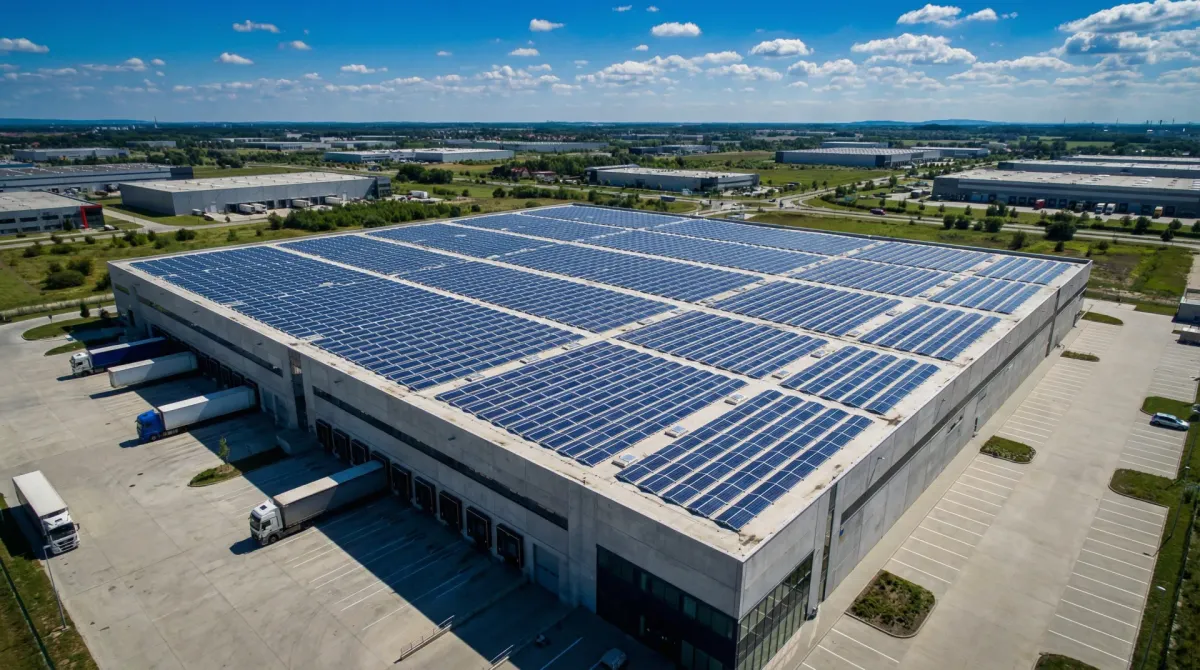
Turn Rooftop Space Into a Cost-Saving Asset
Shops, offices, hotels, showrooms and warehouses typically consume the bulk of their electricity between opening and closing hours — precisely when solar generation peaks. A commercial solar installation is engineered to match this consumption curve, reducing grid draw during business hours while remaining fully grid-connected for continuity outside sunlight hours. Because commercial roofs and terraces are often larger and less shaded than residential ones, systems can frequently be sized more aggressively relative to available space, improving the overall return on investment.
Who is this solution suitable for?
Key Benefits
Strong ROI
Daytime-heavy commercial loads typically improve payback economics versus residential use.
Scalable Design
Systems can be phased or expanded as your business or premises grow.
Lower Operating Costs
Reduced electricity spend supports better operating margins.
Tax & Finance Considerations
Businesses may explore depreciation benefits and commercial finance options.
How the System Works
- 1 Panels installed on the terrace, shed roof, or car park shade structure generate DC electricity through daylight hours.
- 2 A commercial-grade inverter converts this to AC power synchronised with your existing electrical connection.
- 3 Your business consumes solar power directly during operating hours, cutting the units billed by your DISCOM.
- 4 Any surplus, where net metering is available and approved for your connection category, is exported to the grid.
Get a Free Site Assessment
Tell us about your property and our team will call you back.
Available System Capacity
Indicative starting points — final sizing depends on your actual consumption and rooftop or land area.
| System Capacity | Typically Suitable For | Approx. Area Required | Indicative Monthly Generation |
|---|---|---|---|
| 10 kW – 25 kW | Small shops, clinics, boutique offices | 900 – 2,250 sq. ft | 1,200 – 3,000 units/month |
| 25 kW – 50 kW | Mid-size offices, showrooms, hotels | 2,250 – 4,500 sq. ft | 3,000 – 6,000 units/month |
| 50 kW – 100 kW | Warehouses, larger commercial buildings | 4,500 – 9,000 sq. ft | 6,000 – 12,000 units/month |
| 100 kW+ | Multi-building commercial campuses | 9,000+ sq. ft | 12,000+ units/month |
What Goes Into the System
Every installation is built from certified, compatible components sized for your load.
High-Efficiency Panels
Mono PERC or bifacial modules selected for commercial roof profiles.
String / Central Inverters
Sized for three-phase commercial connections and higher loads.
Structure for Flat/Sheet Roofs
Engineered mounting for RCC terraces or metal sheet roofing.
Commercial-Grade Cabling
DCDB/ACDB panels and protection sized for higher current.
Remote Monitoring
Multi-site dashboards for businesses with more than one location.
Fire & Safety Protection
Arc-fault protection and lightning arrestors per site requirement.
Suggested Installation Process
A clear, transparent path from enquiry to handover.
Enquiry & Consultation
Understand your electricity bill, sanctioned load and roof profile.
Site Survey & Load Study
Assess roof structure, shading, and business operating hours.
System Design & Quote
Right-sized commercial design with a detailed cost breakdown.
Approvals & Documentation
Support with DISCOM and net-metering paperwork where applicable.
Installation
Work scheduled to minimise disruption to daily business operations.
Testing & Handover
Commissioning, monitoring setup, and staff orientation.
What Affects Your Project Cost
- System capacity relative to your sanctioned commercial load
- Roof type — RCC terrace, metal sheet, or ground/car-park mounted
- Three-phase inverter and protection equipment specification
- Site accessibility and any structural reinforcement required
- Whether the connection qualifies for net metering under your DISCOM's commercial tariff category
Estimated Savings Potential
Because commercial electricity tariffs are often higher than residential slabs and consumption is concentrated in daylight hours, businesses frequently see a meaningful reduction in their monthly electricity spend. Actual savings depend on your tariff category, load factor, and how much of your consumption overlaps with solar generation hours.
Use our interactive calculator on the homepage for an indicative estimate based on your own electricity bill and rooftop area.
Calculate Your SavingsSubsidy Applicability
The central residential rooftop subsidy scheme generally does not apply to commercial connections. Businesses should instead evaluate accelerated depreciation benefits under applicable income tax provisions and any state-specific industrial or commercial solar incentives, which change periodically — our team can point you to current guidance during your consultation.
View Full Subsidy GuideFinance Options
Commercial solar can often be financed through business loans, equipment finance, or lease/PPA-style arrangements offered by select finance partners, subject to your business's credit profile and the lender's underwriting policy.
Explore EMI & FinanceMaintenance Requirements
Commercial systems benefit from a structured Annual Maintenance Contract (AMC) covering scheduled cleaning, inverter servicing, and performance monitoring, since even small efficiency losses translate into larger absolute savings at commercial scale.
Solar Maintenance PlansIllustrative Project Examples
Representative examples of the scale and outcomes this solution supports.
25 kW Showroom Rooftop
25 kW / On-Grid
A retail showroom with a large flat terrace installed a 25 kW system to offset daytime lighting and HVAC load.
60 kW Warehouse Installation
60 kW / On-Grid
A logistics warehouse used its extensive shed roof for a 60 kW array supporting material-handling equipment.
15 kW Boutique Hotel System
15 kW / On-Grid
A guesthouse offset common-area lighting, laundry and daytime HVAC consumption.
Why Choose Sarth Solar for Commercial Solar
Structural Assessment
We evaluate your roof's load-bearing capacity before finalising design.
Documentation Support
Assistance with net-metering and connection-related paperwork.
Minimal Business Disruption
Installation scheduling planned around your operating hours.
Certified Installation
Trained teams follow documented electrical safety practices.
Priority After-Sales Service
Faster response times suited to commercial uptime needs.
Transparent Commercial Pricing
Itemised quotes scaled to your business size.
Related Solar Solutions
Commercial Solar — Frequently Asked Questions
The core technology is similar, but commercial systems are typically larger, often three-phase, and designed around business operating hours and sanctioned commercial loads rather than household usage patterns.
We plan installation schedules to minimise disruption, often working around business hours or in phases for larger sites.
The primary central rooftop subsidy scheme is generally aimed at residential connections. Commercial customers should ask about depreciation benefits and any applicable state schemes.
We review your sanctioned load, past electricity bills, roof area and operating hours to recommend a right-sized system rather than the maximum the roof can hold.
Payback varies with tariff category, load factor and financing terms; many commercial customers see favourable paybacks due to higher daytime consumption and commercial tariff rates.
Where roof area and sanctioned load allow, systems can often be expanded in phases — this is best planned at the design stage.
Net metering approval and availability depend on your DISCOM's commercial connection policies, which can differ from residential rules.
Regular cleaning, inverter health checks and performance monitoring, ideally through a structured AMC given the larger scale of commercial systems.
Yes, our monitoring solutions support multi-site dashboards so you can track generation and performance across locations.
Enquire About Commercial Solar
Fill in your details — our team typically responds within one business day.