
Solar Power for Hospitals and Healthcare Facilities
Healthcare facilities carry some of the highest and most continuous electricity loads of any customer category — solar, paired with careful backup planning, helps manage rising energy costs.
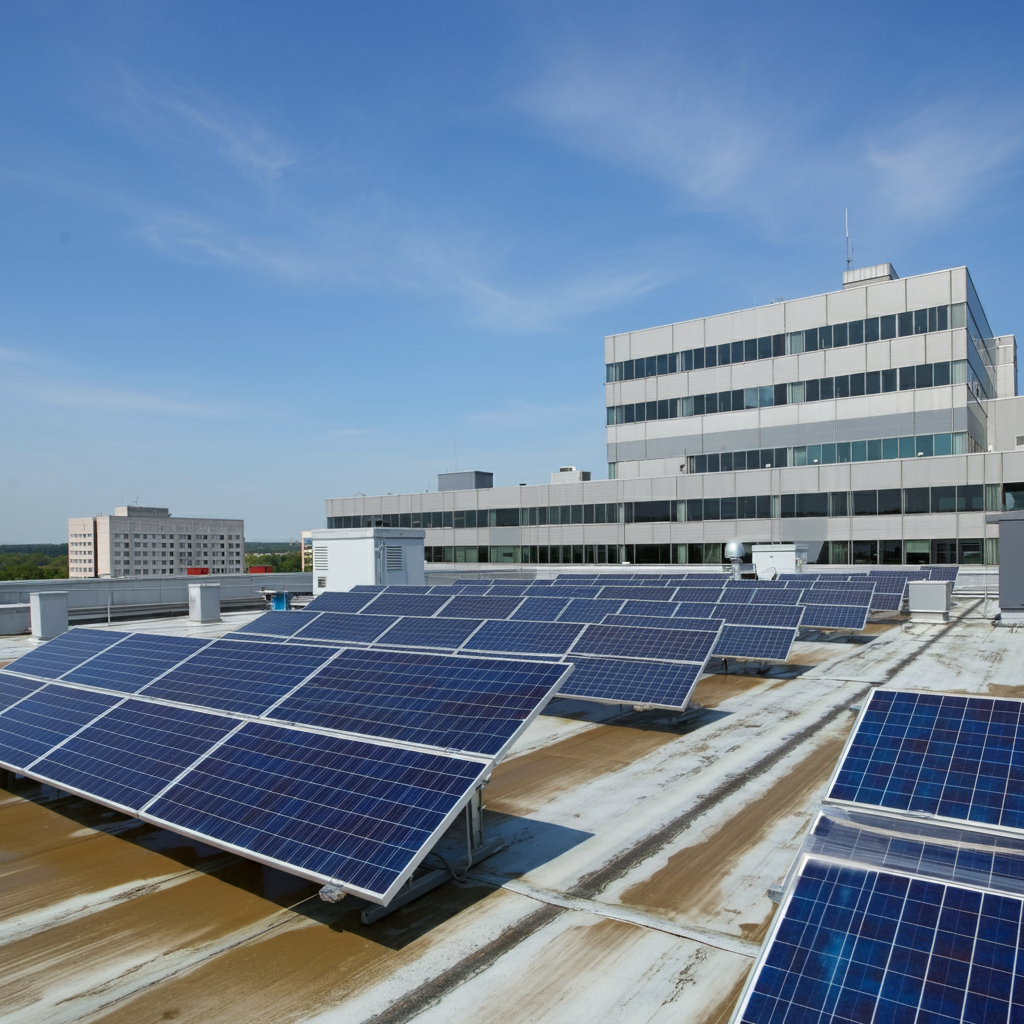
Energy Cost Optimisation Without Compromising Reliability
Hospitals and clinics run diagnostic equipment, HVAC, lighting, refrigeration and life-safety systems around the clock, resulting in some of the highest and most consistent electricity bills of any facility type. Solar can meaningfully offset daytime consumption, but because reliability is non-negotiable in a healthcare setting, hospital projects require especially careful critical-load planning — identifying exactly which circuits (such as ICU equipment, operation theatres, or cold-chain storage) must never lose power, and designing the solar and backup configuration around that reality rather than treating solar as a blanket replacement for existing backup infrastructure like generators.
Who is this solution suitable for?
Key Benefits
Built Around Critical Loads
Design starts from what must never lose power, not the other way round.
Meaningful Cost Offset
High baseline consumption means solar savings can be substantial in absolute terms.
Optional Hybrid Backup
Battery backup for select essential circuits where required.
Continuous Monitoring
Visibility into system performance for facilities management teams.
How the System Works
- 1 Panels installed across hospital rooftops or adjoining structures generate DC power through the day.
- 2 The inverter (grid-tied or hybrid, depending on the facility's backup requirements) converts this to usable AC power.
- 3 General hospital loads — HVAC, lighting, administrative areas — draw solar power directly during daylight hours.
- 4 Where a hybrid configuration is used, designated essential circuits can draw from battery backup during outages, working alongside (not replacing) existing generator infrastructure.
Get a Free Site Assessment
Tell us about your property and our team will call you back.
Available System Capacity
Indicative starting points — final sizing depends on your actual consumption and rooftop or land area.
| System Capacity | Typically Suitable For | Approx. Area Required | Indicative Monthly Generation |
|---|---|---|---|
| 25 kW – 50 kW | Small clinics and diagnostic centres | 2,250 – 4,500 sq. ft | 3,000 – 6,000 units/month |
| 50 kW – 150 kW | Mid-size hospitals | 4,500 – 13,500 sq. ft | 6,000 – 18,000 units/month |
| 150 kW – 300 kW | Larger multi-specialty hospitals | 13,500 – 27,000 sq. ft | 18,000 – 36,000 units/month |
| 300 kW+ | Large hospital campuses | As per site survey | As per system design |
What Goes Into the System
Every installation is built from certified, compatible components sized for your load.
Solar Panels
High-efficiency modules installed across available hospital rooftop area.
Grid-Tied or Hybrid Inverter
Configuration chosen based on the facility's backup requirements.
Battery Bank (Optional)
Sized for specific essential circuits, working alongside existing generators.
Mounting Structure
Engineered for hospital roof types with careful access planning.
Segregated Critical Circuits
Clear separation between general and essential-load wiring.
24/7 Monitoring
Continuous visibility suited to facilities management teams.
Suggested Installation Process
A clear, transparent path from enquiry to handover.
Enquiry & Critical Load Mapping
Identify which circuits must never lose power before anything else.
Site Survey
Assess rooftop area, existing generator setup and electrical infrastructure.
System Design & Quote
Solar and, where needed, hybrid backup sizing around your load map.
Approvals & Documentation
Support with institutional connection paperwork.
Phased Installation
Scheduled to avoid any interruption to ongoing patient care.
Testing, Handover & Monitoring
Rigorous testing of backup switchover before full handover.
What Affects Your Project Cost
- System capacity relative to the hospital's sanctioned load and rooftop area
- Whether hybrid backup is required, and for how many essential circuits
- Integration requirements with existing generator or UPS infrastructure
- Segregated wiring for critical vs. general loads
- Site logistics for installation without disrupting patient care areas
Estimated Savings Potential
Given the scale of typical hospital electricity consumption, even a moderate percentage offset from solar can represent a substantial absolute reduction in monthly costs, which can be redirected toward patient care and facility investment.
Use our interactive calculator on the homepage for an indicative estimate based on your own electricity bill and rooftop area.
Calculate Your SavingsSubsidy Applicability
Hospitals generally fall under an institutional or commercial connection category, which typically does not qualify for the central residential rooftop subsidy scheme. Some healthcare facilities may be eligible for CSR partnerships, state healthcare infrastructure schemes, or accelerated depreciation benefits — best evaluated with your finance team and our advisors together.
View Full Subsidy GuideFinance Options
Hospitals can explore institutional loans, equipment finance, or structured energy-service arrangements, subject to the facility's financial profile and the lender's assessment.
Explore EMI & FinanceMaintenance Requirements
Given the criticality of uninterrupted operation, we recommend a comprehensive AMC for hospital installations, including more frequent inspection cycles, priority response times, and battery health checks where a hybrid backup configuration is in place.
Solar Maintenance PlansIllustrative Project Examples
Representative examples of the scale and outcomes this solution supports.
60 kW Multi-Specialty Hospital System
60 kW / On-Grid
A mid-size hospital offset HVAC and general ward lighting load with a rooftop installation.
30 kW Diagnostic Centre System
30 kW / On-Grid
A diagnostic centre reduced daytime equipment and lighting electricity costs.
100 kW Hybrid Hospital System
100 kW + Battery Backup
A larger facility added hybrid backup for select essential circuits alongside its existing generator.
Why Choose Sarth Solar for Hospital Solar
Critical Load Expertise
We plan around what genuinely cannot lose power, working with your facilities team.
Institutional Documentation Support
Assistance with hospital-category connection paperwork.
Zero-Disruption Installation Planning
Work sequenced around patient care areas and hours.
Rigorous Safety Standards
Segregated wiring and thorough testing before handover.
Priority After-Sales Response
Faster support turnaround suited to healthcare uptime needs.
Transparent, Itemised Proposals
Clear costing to support institutional budget approvals.
Related Solar Solutions
Hospital Solar — Frequently Asked Questions
No — solar and battery backup are designed to work alongside existing generator infrastructure for select essential loads, not as a full replacement for hospital-grade backup power systems.
We work with your facilities team to map critical circuits (ICU, OT, cold-chain storage, etc.) and design the backup configuration around that priority list.
We plan installation in phases and around patient care areas and hours specifically to avoid any interruption to ongoing operations.
Hospitals generally fall under an institutional/commercial category outside the standard residential subsidy scheme; alternative funding avenues can be discussed based on your facility type.
We conduct thorough backup switchover testing and load verification before formal handover, particularly for any hybrid backup configuration.
Yes, our monitoring solutions provide continuous visibility into generation and system health suited to facilities management workflows.
We recommend a priority-response AMC for healthcare facilities given the criticality of uninterrupted operation — response terms are agreed in your maintenance contract.
Integration approaches depend on your existing UPS and generator setup and are assessed case-by-case during system design.
This depends heavily on bed count, equipment load and operating hours — our site survey and load study provide a facility-specific recommendation.
Enquire About Hospital Solar
Fill in your details — our team typically responds within one business day.